How to Rank in ChatGPT: What Actually Gets Brands Mentioned
How to rank in ChatGPT: nine practical tactics for ChatGPT search, what you can and cannot control, a checklist table, and how to measure whether you show up.
Key takeaways
- ChatGPT has no ranking you can buy or claim; you earn mentions when its search feature finds, trusts and agrees with sources about you.
- Sites that block OAI-SearchBot will not be shown in ChatGPT search answers, so crawler access is the one hard prerequisite you fully control.
- Most of what decides a recommendation sits off your site: reviews, comparison articles, forums and Reddit, so plan outreach as much as content.
- Answers vary run to run, so measure with a fixed prompt set tracked over weeks, never from a single reply.
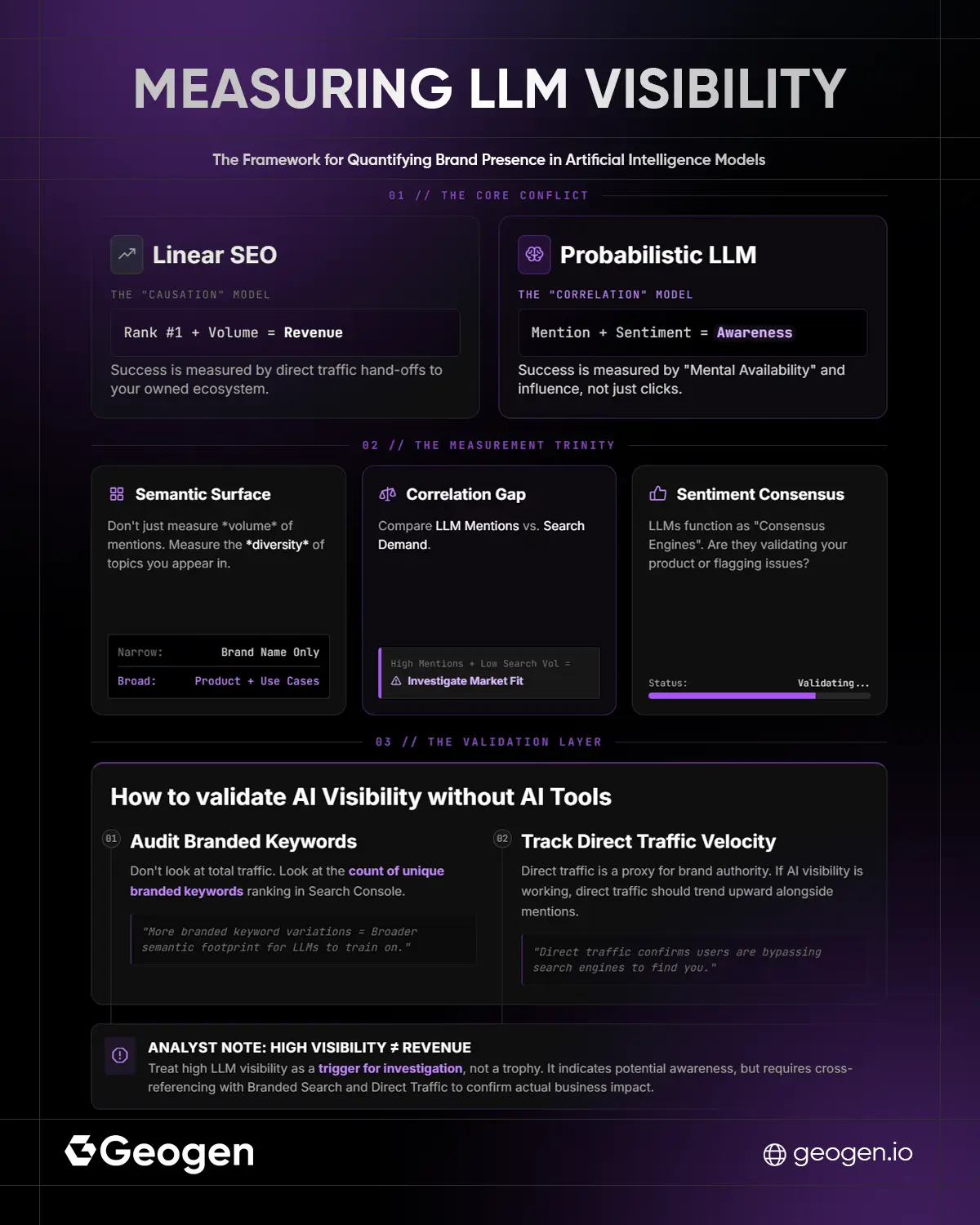
To rank in ChatGPT, let OpenAI’s search crawler reach your site, publish pages that answer buyer questions directly, make your brand easy to identify, and get the same facts repeated on the review sites, articles and communities ChatGPT reads. There is no ranking to claim and no guarantee, but each step raises the odds that ChatGPT names you.
This page covers ChatGPT specifically. For the engine-agnostic version, read how to get cited by AI.
What does “ranking in ChatGPT” actually mean?
It means being mentioned in the answer, being linked as a source, or both. ChatGPT does not publish a ranked list of results. When it uses search, it retrieves web results, reads passages and writes an answer with citations. So you are competing to be selected and recommended for a specific prompt, not to hold a position for a keyword.
Two different situations exist:
| Situation | How ChatGPT answers | What helps you |
|---|---|---|
| Answer from model knowledge | No live sources; relies on what it learned in training | Long-term brand presence across the web |
| Answer using ChatGPT search | Fetches and cites current web pages | Crawler access, quotable pages, third-party corroboration |
You can influence the second quickly and the first only slowly.
What can you control, and what can’t you?
Be honest about the boundary before spending money.
| You can control | You can only influence | You cannot control |
|---|---|---|
| Whether OAI-SearchBot can crawl you | What reviewers and journalists say | Which sources ChatGPT picks on a given run |
| How clearly your pages answer questions | Whether you are in “best of” lists | ChatGPT’s ranking logic and weights |
| Consistency of your brand facts | Tone of forum discussion | Model training data and its update schedule |
| Whether you measure properly | Competitor presence | Personalised or varying answers per user |
Answers are generated, so the same prompt can name different brands on different runs. That is why measurement (tactic 9) matters.
What are the 9 tactics to rank in ChatGPT?
1. Allow OAI-SearchBot
This is the one hard prerequisite. OpenAI documents that OAI-SearchBot is used to surface websites in ChatGPT’s search features and that sites opted out of it will not be shown in ChatGPT search answers. GPTBot is a separate crawler for training, so blocking it does not remove you from ChatGPT search. Robots.txt changes can take about 24 hours to take effect.
Also check that your CDN or firewall is not returning 403 errors to the bot. Test with the AI crawlability checker and see the AI crawler guide.
2. Make your pages indexable and fast to read
Keep important pages in your sitemap, return clean 200 responses, and put key facts (prices, specs, answers) in plain HTML rather than behind scripts. A page ChatGPT cannot fetch cannot be cited, however good it is.
3. Answer the question in the first paragraph
Write each page for one buyer prompt. Open with a 40 to 70 word direct answer, then add evidence. Use question headings, short sections and a table for comparisons. Name your brand and product explicitly in the passage so it makes sense if lifted alone.
4. Cover what ChatGPT searches for while answering
ChatGPT often breaks a prompt into several searches before it writes. For “best accounting software for freelancers” it may look for pricing, reviews and integrations separately. Add sections that answer those sub-questions: pricing, alternatives, who it suits, limitations. In GeoGen, query fan-outs are currently available for Grok and Perplexity, which is useful as a proxy for the searches a retrieval engine runs.
5. Make your entity unambiguous
Use one literal sentence about who you are, “[Company] provides [product] for [audience]”, on your homepage, About page, profiles and press boilerplate. Keep names, tiers and prices identical everywhere. If your brand name is also a common word or shared with another company, add disambiguating context.
6. Get into the reviews and “best of” articles
ChatGPT frequently cites comparison articles and review platforms for recommendation prompts. Find the articles cited for your category, then send authors accurate, specific updates: pricing, features, screenshots, customer evidence. Encourage detailed customer reviews rather than bare star ratings, and follow each platform’s rules on incentives. Be honest: being listed is earned, not guaranteed.
7. Take part in Reddit and communities, transparently
Community threads are a common source. In GeoGen’s web hosting AI visibility study, 2,000+ non-branded prompts across six engines including ChatGPT showed Reddit as the most-cited source at 11% of citations, with the top five sources at roughly 45%. Answer real questions helpfully, disclose your affiliation, correct misconceptions with sources, and never astroturf. Moderators remove promotion and engines read the resulting discussion.
8. Publish evidence others can quote
Original numbers, dated comparisons, methodology pages and documentation give ChatGPT something specific to cite. Replace adjectives with facts. Princeton-led research that introduced GEO reported that adding citations, quotations and statistics improved visibility in generative engine responses by up to 40% on its benchmark, a reason to include real, sourced facts, though not a promise for your site.
9. Measure with a fixed prompt set
Write 20 to 50 prompts the way buyers ask them, tag them by funnel stage, and run them repeatedly. Record whether you are named, your position in the answer, the sentiment and the cited sources. OpenAI’s publisher FAQ states that ChatGPT adds a utm_source=chatgpt.com parameter to referral links, so you can also filter analytics for ChatGPT visits.
GeoGen reads ChatGPT as a user sees it, runs your prompts every day, and reports visibility, average position, sentiment, mentions and the exact citations. See ChatGPT brand tracking.
What is the ChatGPT visibility checklist?
| Done? | Check | Why it matters |
|---|---|---|
| Aspect | OAI-SearchBot allowed in robots.txt | Prerequisite for ChatGPT search answers |
| Aspect | No 403s to the bot in CDN or firewall logs | Access can fail silently |
| Aspect | Key pages in sitemap, indexable, in HTML | Retrievability |
| Aspect | One direct-answer paragraph per target prompt | Quotability |
| Aspect | Pricing, specs and limits in tables | Facts engines can lift |
| Aspect | One brand description used everywhere | Entity clarity |
| Aspect | Facts consistent across directories and profiles | Corroboration |
| Aspect | Listed or updated in at least three cited articles | Third-party consensus |
| Aspect | Detailed reviews on the platforms your buyers use | Recommendation evidence |
| Aspect | Disclosed, helpful participation in cited communities | Reddit and forum signal |
| Aspect | One original data page or study | Information others cite |
| Aspect | 20 to 50 prompts tracked weekly or daily | Know whether it works |
How long will it take, and how will you know it worked?
Crawler and page fixes can show within days to weeks once pages are fetched; reputation takes months. You will know it worked when the share of tracked answers naming you rises over several weeks, and a page you changed appears among the cited sources for its prompt. Expect noise: one run proves nothing.
Use the GeoGen playbook for the weekly routine and the GEO strategy hub for related tactics.
Frequently asked questions
How do I get my website to show up in ChatGPT?
Make sure OAI-SearchBot can crawl your site, publish pages that answer buyer questions in the first paragraph, and get the same facts repeated on trusted third-party sites. Any public site can appear in ChatGPT search, but no tactic guarantees inclusion.
Does ChatGPT use Google or Bing results?
ChatGPT search draws on web results and OpenAI's own crawler, but OpenAI does not publish a full list of providers or weights. Practically, make your pages indexable on major search engines and allow OAI-SearchBot rather than optimizing for one provider.
Can I pay to rank in ChatGPT?
Not for organic answers. You cannot buy a position in ChatGPT's responses. What you can invest in is the evidence it reads: your pages, reviews, articles and community presence. Sponsored coverage elsewhere helps only if it is clearly labelled and genuinely useful.
How long does it take to appear in ChatGPT answers?
On-site fixes such as unblocking the crawler or rewriting a page can be reflected within days to weeks once the page is fetched. Reputation signals from reviews, press and communities take months. There is no guaranteed timeline, so track weekly.
Does Reddit help you rank in ChatGPT?
Reddit is frequently cited by AI engines; in GeoGen's hosting study it was the single most-cited source at 11% of citations across six engines including ChatGPT. Genuine, disclosed participation can help; spam and undisclosed promotion get removed and can backfire.
How can I track whether ChatGPT mentions my brand?
Write 20 to 50 buyer-style prompts, run them repeatedly in logged-out sessions or with a tracker, and record whether you are named, in what position and which sources are cited. GeoGen runs this daily and reports visibility, citations and sentiment for ChatGPT.